Digital Architecture for Stronger Customer Relationships.
Brand Visibility for Service Businesses: Why Marketing Fails Before Ads Ever Start
Brand visibility for service businesses determines whether paid ads convert or drain budget. Four foundation gaps explain why most marketing fails before campaigns ever launch.
BRAND VISIBILITYLOCAL SEO
Jireh Gibson
5/28/20267 min read

Brand visibility for service businesses is not a campaign problem. Most business owners who call a marketing agency with frustration are not describing a bad ad. They are describing a broken foundation. The campaign that generated clicks but no calls, the social posts that got engagement but no revenue, the Google Ads spend that produced a cost-per-lead no business model can sustain: these are almost always symptoms of the same underlying problem. The system the ad was pointing to was never ready to convert.
To understand why business marketing fails requires stepping back from the campaign layer and examining what exists before investing any ad dollars. A Google search ad directs a potential customer or client toward your business, who then immediately begins to evaluate whether you are credible, consistent, and worth trusting with their time or money. Prospects judge you across your Google Business Profile, website, reviews, social presence, and published content. When those trust signals are weak, incomplete, or contradictory, none of your marketing efforts will overcome the deficit.
Paid advertising delivers the prospect. However, what's on the other side of the click determines whether the investment results in a positive ROI.
Most Fort Wayne and Indianapolis service businesses enter their first campaign with four brand visibility gaps already working against them. This post names each one and puts a number on what it costs
Paid Ads Fail Without a Brand Visibility Foundation for Service Businesses
Small business owners falsely assume paid ads act as the ultimate growth accelerator. Nielsen's global study of 40,000 respondents proves otherwise: trust in paid advertising ranks lower than trust in every other measured channel. Eighty-eight percent of global respondents trust recommendations from people they know above all else.
Editorial content, branded websites, and online consumer reviews all outrank paid search and display advertising. Service businesses running ads without a brand visibility foundation compete in the channel consumers trust least, with zero accumulated social proof to close the credibility gap.
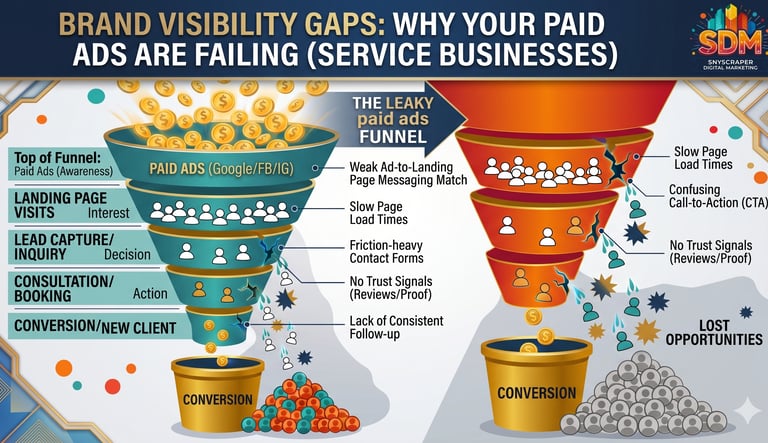
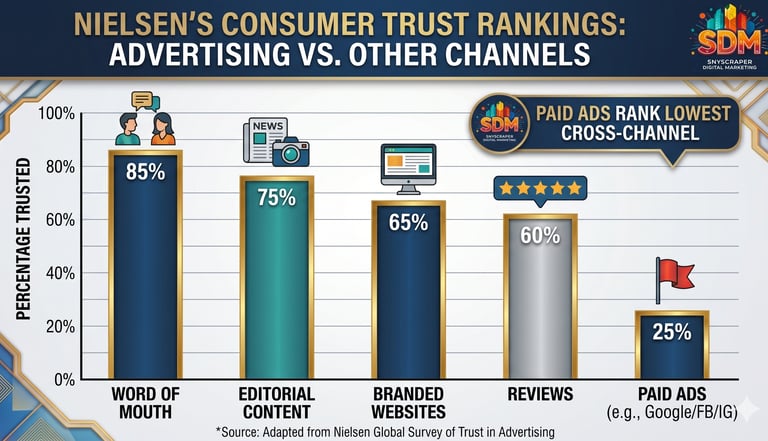
The channel consumers trust least paired with a brand they've never heard of is not a marketing strategy. It's a tax on impatience.
HubSpot's brand visibility research brings a raw revenue dimension to this trust problem. Aligned visual identity, tone, and messaging across your website, social profiles, Google Business Profile, email, and ads increase revenue by up to 23%. Consistent impressions accumulate value; contradictory impressions reset that value to zero.
Running paid ads with a mismatched Facebook logo, a fourteen-month-old GBP, and no consistent content presence leaves 23% in revenue on the table while actively signaling unreliability to every lead at the door.
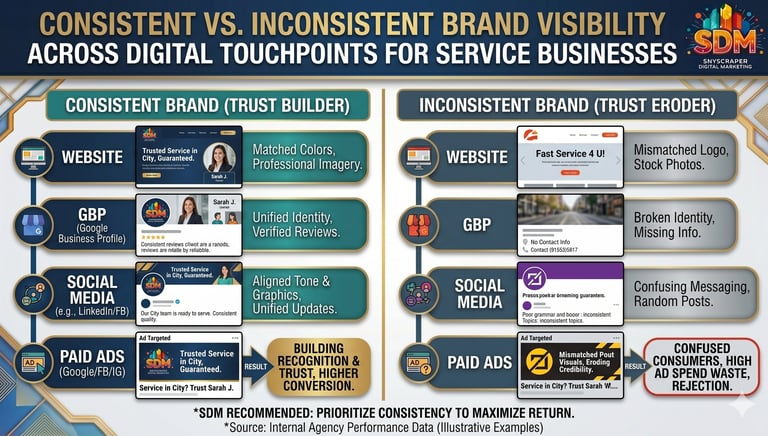
Prospects run your brand through a brutal four-step sequence: see the ad, search the business name on Google, visit the website, and review the social profiles.
For most service businesses in Fort Wayne and Indianapolis, those four experiences tell completely different stories. That disconnect causes business marketing to fail at scale.
The Local SEO and Google Business Profile Gap
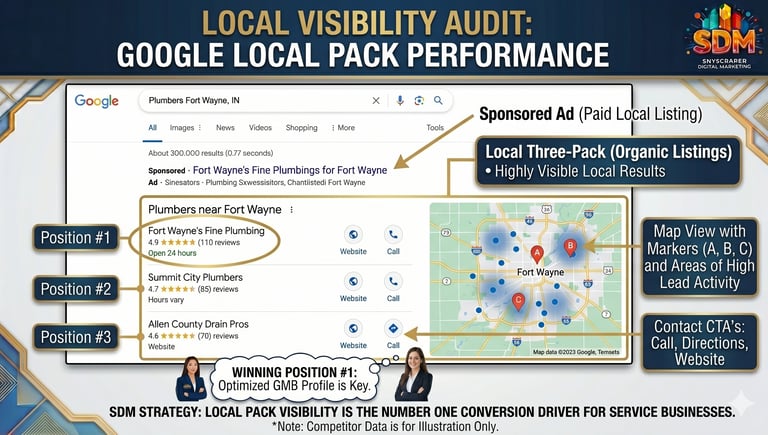
The Google Local Pack (the map-based results above organic listings) represents the highest-converting digital real estate for local service businesses. Appearing in the Local Pack for "HVAC repair Fort Wayne" or "interior designer Indianapolis" captures prospects at the precise moment they want to buy. Missing that pack loses the moment entirely, regardless of ad spend.
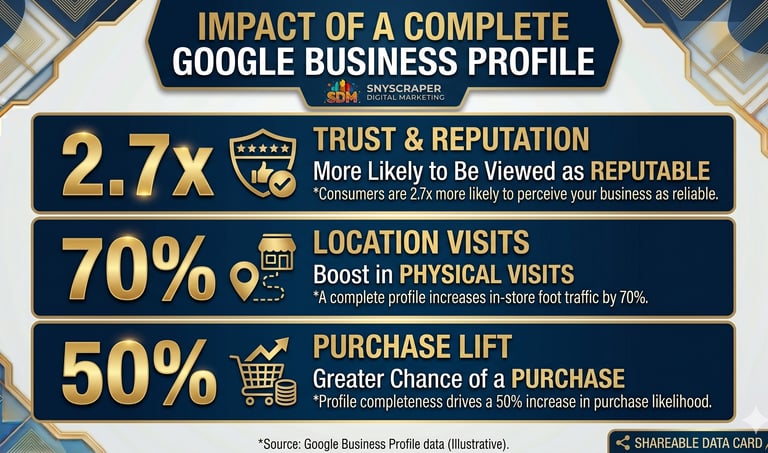
A complete Google Business Profile makes a business 2.7 times more reputable, 70% more likely to drive location visits, and 50% more likely to secure a purchase. This 2.7x multiplier creates a structural edge no ad budget can buy. Ads generate impressions; optimized profiles generate trust.
Google Business Profile factors dictate the Local Pack algorithm. Primary categories, address proximity, business name keywords, and review velocity drive these rankings. An unclaimed profile, mismatched NAP data, generic category selections, and zero recent reviews structurally exclude a business from map listings (no matter how much it invests in paid local ads).
Audits of Fort Wayne and Indianapolis service businesses reveal four consistent brand visibility gaps:
Unclaimed or Unverified Profiles: Displaying auto-generated Google data with incorrect hours, categories, or service areas.
Incomplete Data: Missing photos, service descriptions, Q&A responses, and active operational attributes.
NAP Inconsistency: Conflicting name, address, and phone details across web directories, which weakens local relevance signals.
Insufficient Review Volume: Fewer than ten reviews or zero owner responses in the past ninety days, which suppresses Local Pack performance.
Every week an incomplete GBP sits online, local searches return a competitor’s name. Paid ads cannot bridge that gap; they only fund the exposure of it.
Reviews Are Brand Visibility Infrastructure, Not a Marketing Tactic
Reviews document every past client interaction and function as a primary trust signal that owned content cannot replicate. No budget can manufacture them. They are infrastructure, and infrastructure must come first.
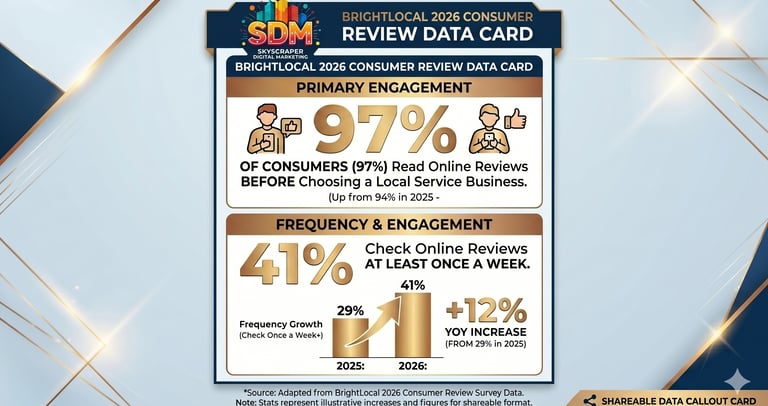
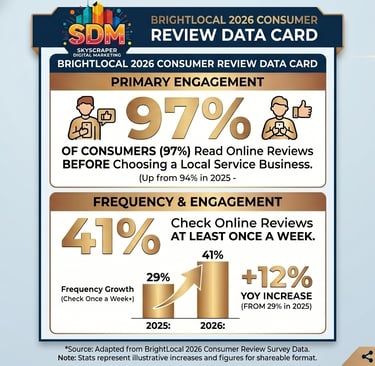
BrightLocal's 2026 consumer review survey of 1,002 US adult consumers found that 97% of consumers read online reviews before choosing a local business, and 41% always read reviews before making a decision. This baseline jumped from 29% the prior year, proving that consumers increasingly treat reviews as a mandatory evaluation step.
Google remains the dominant review platform; reviews on a verified profile feed Google's Local Pack algorithm while carrying equal weight with prospective clients.
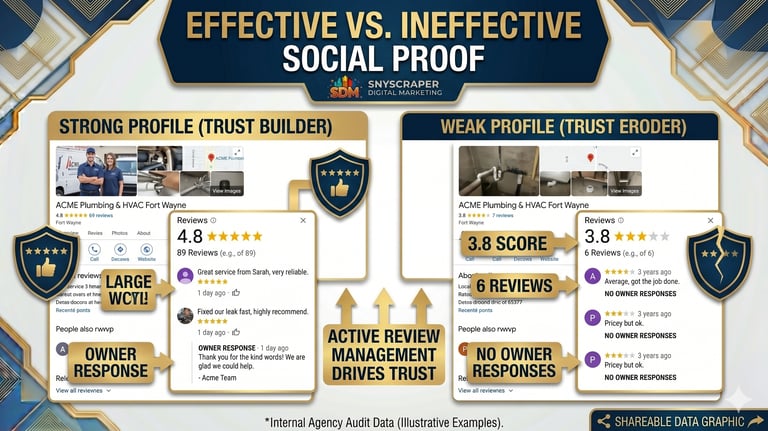
The math on missing infrastructure is simple: an ad generates website traffic, but the destination lacks social proof. A prospect clicks a Google search ad for an Indianapolis landscaping company, finds a functional website with zero visible reviews, opens a new tab, and discovers a Google Business Profile with six reviews, a 3.8-star average, and zero owner responses. They close both tabs and click the next competitor. The ad budget paid for the click; the missing review infrastructure forced the exit.
Building review infrastructure before scaling paid spend requires four core components:
A claimed, verified Google Business Profile with precise category and service information.
A systematic post-project review pipeline that generates a steady flow of new feedback rather than occasional spikes.
Rapid owner responses on every positive and negative review to demonstrate active engagement.
A minimum threshold of fresh reviews (within the last ninety days) to signal current operations to both Google and prospects.
These components require zero paid ad budget, yet each one maximizes the return on every future ad dollar spent.
Content Marketing ROI Outperforms Paid Ads for Service Businesses
The ROI comparison between organic content and paid advertising is a measurement question, and the measurement evidence consistently favors organic.
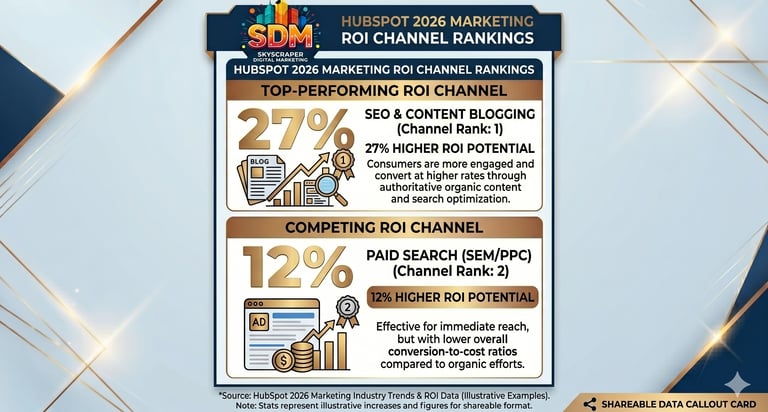
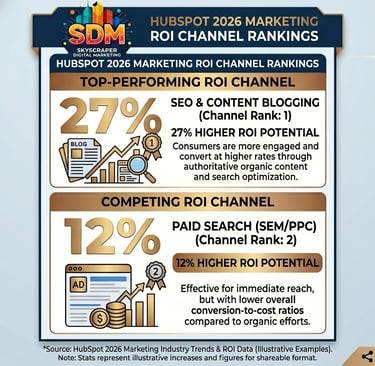
Data consistently favors organic content over paid advertising. HubSpot's State of Marketing 2026 survey of over 1,500 global marketers confirms this gap: SEO and blog content lead as the top ROI-producing channels at 27%, while paid search and display trail at a mere 12%. Furthermore, HubSpot's data shows that small businesses see a 23% higher ROI likelihood from blog content than the market average.
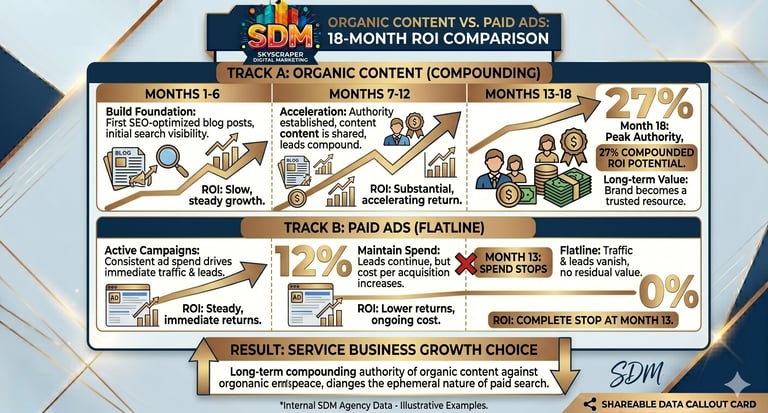
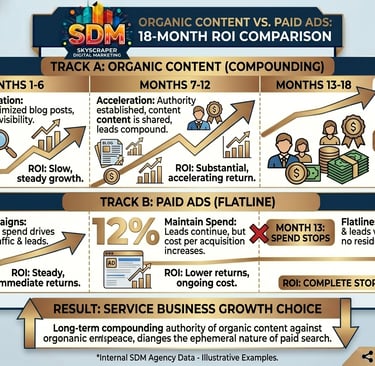
The advantage is structural. An SEO-optimized blog post continually generates qualified traffic, builds topical authority, and produces leads for months or years after publication without ongoing ad spend. Conversely, a paid ad produces results only while the budget runs, essentially returning your visibility to absolute zero the moment the ad spend stops.
Publishing authoritative, search-optimized content about your service category yields initial traction within six to nine months, followed by compounding returns over multiple years as domain authority and expertise accumulate.
The businesses generating the highest returns from paid advertising build their organic foundation first. Their content answers customer questions before searches even begin, their websites demonstrate category authority, and their Google Business Profiles remain optimized and review-rich. When they run an ad, the prospect lands in an ecosystem engineered to convert. Content authority makes paid advertising rational.
Build this foundation with a core pillar page addressing your client's primary problem. Support it with articles answering their pre-hire questions, and deploy case studies to smash the gap between interest and trust. A consistent publishing cadence tells Google's algorithm and every new visitor that you own your category.
Your Brand Visibility Foundation Determines the Return on Every Ad Dollar
The most effective paid advertising campaigns in Fort Wayne and Indianapolis succeed because the business owners built the foundation first. They optimized their Google Business Profiles before launching Local Services Ads, built review pipelines before increasing ad spend, published authority-building content before buying paid search terms, and aligned their brand across every touchpoint before asking a stranger for a click.
A broken foundation forces paid spend into a system incapable of converting traffic, while competitors with clean local signals and growing review pipelines widen the gap. Wasted ad spend is easy to calculate in hindsight; the long-term cost of delay is much harder to recover.
The ads are often sound. The system they point to was never built to do the job.


Know Where Your Brand Visibility Stands
The Brand Visibility Review at Skyscraper Digital Marketing is a free 15-minute diagnostic that identifies the specific foundation gaps costing you leads right now. Broken foundations fund your competitor's growth instead of your own. The assessment evaluates your Google Business Profile completeness, brand consistency across touchpoints, review infrastructure, and content authority baseline to deliver clear, specific next steps.
Get an objective look at how your brand actually stacks up in the market. Request your free 15-minute Brand Visibility Review at Skyscraper Digital Marketing today.
Fix your foundation now to compound your visibility advantage
Skyscraper Digital Marketing
Fort Wayne, IN
jireh@skyscraperdigitalmarketing.com
© 2025 Skyscraper Digital Marketing. All rights reserved.